Showing posts with label New Monasticism of the Middle Ages. Show all posts
Monday, September 10, 2018
Long-Ago Christians Passionately Pursuing Christ

What was
it like being a Christian when no one had a copy of the Bible? Well into the
Middle Ages, the only copies of the Bible were in churches and monasteries.
Laypeople had very little available to them before the year 1200. But from that
time on, there were some great spiritual renewal across Europe.
Christian
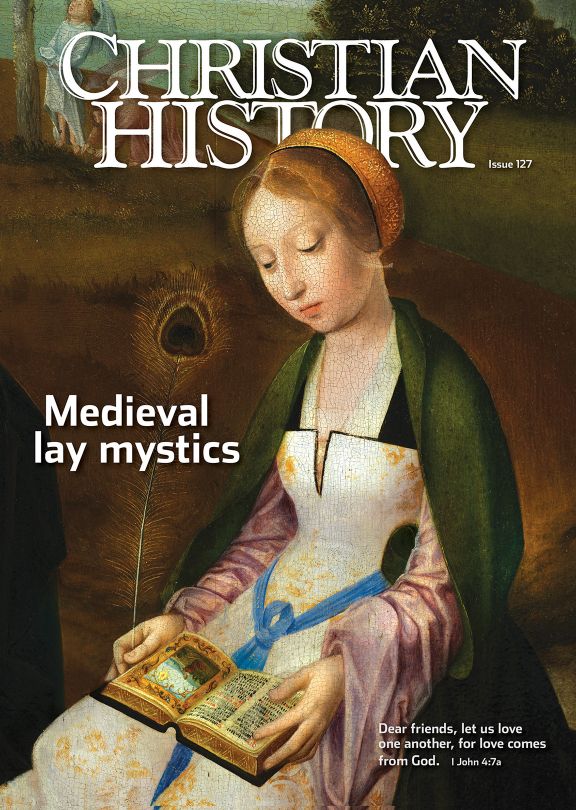
History Magazine just came out with an issue of Medieval Lay Mystics. These are
laypeople who lived before 1500 who wanted to have a personal walk with the
Lord. Many had a deep prayer life. Two of the items in this issue I wrote. You
can copy and paste the links from here or just go to the sidebar and click!
Monday, August 30, 2010
Laypeople Join Francis of Assisi and his Revival: Third Order Franciscans
As multitudes heard the preaching of Francis and the Little Brothers, young and old, men and women, married and single, came to Christ. Single and widowed men were free to join the Friars Minor—the “Little Brothers.” Single and widowed women joined the Poor Clares, although their houses were fewer and less accessible to women across Europe.
But what was to be done with those who were married? They wanted to remain committed husbands and wives, and they wanted to provide for their children.
Middle Way
Several years before he died, Francis made provision for those who were not able to join the Little Brothers (referred to as the First Order) or the Poor Clares (Second Order). This Third Order was for laypeople who wanted to maintain their lives in the world—holding jobs and raising families—while following a spiritual life as much as possible.
Such a middle way between the religious life of monks/nuns/friars and the secular life of ordinary people is part of the genius of the New Monasticism of the Middle Ages. The Beguines of northern Europe provided opportunity for laywomen, initially including married housewives as well as the single maids and widows. In the Alpine regions of southern France and northern Italy, the Waldensian movement sought to include whole families as well as the men who traveled about preaching two-by-two.
Above all the Humiliati in the regions of northern Italy around Milan provided three opportunities for people to join their spiritual renewal movement. For those going into “full-time ministry,” as it were, they could take vows and become an Augustinian canon. Or one could live in a single sisters’ household or a single brothers’ household, remaining laypeople. Or, the third option—especially for married men and women—was to remain as part of the family and live out one’s spiritual growth while living at home and maintaining a job. This option was referred to at the “Third Order” and was confirmed by papal rule in 1201. Undoubtedly Francis and Cardinal Ugolino, who helped provide structure and protection for the Franciscans, knew of these developments taking place several hundred miles to the north. It is likely that Francis fashioned his rule for the Third Order with this model in the back of his mind.
Movement of Laypeople
Thus, Francis’ Third Order was not the first of its kind; however, it soon became the most popular and most influential movement of laypeople seen since the Early Church.
The Third Order commitment was similar to what we have today as “accountability groups” or other small groups for spiritual formation. They dedicated themselves to prayer, some fasting, and meeting together each month.
Just a few of the best known figures who sought spiritual growth by becoming part of the Third Order Franciscans are: the writers Dante and Petrarch, the artist Giotto who painted the scenes of Francis’ life in the Basilica of St. Francis, explorers Christopher Columbus and Vasco da Gama. A number of the popes, as well as King Louis IX (St. Louis) of France and Elizabeth of Hungary and Thomas More of England were significant political figures who led spiritual lives as Franciscan tertieries.
2010 © Glenn E. Myers
But what was to be done with those who were married? They wanted to remain committed husbands and wives, and they wanted to provide for their children.
Middle Way
Several years before he died, Francis made provision for those who were not able to join the Little Brothers (referred to as the First Order) or the Poor Clares (Second Order). This Third Order was for laypeople who wanted to maintain their lives in the world—holding jobs and raising families—while following a spiritual life as much as possible.
Such a middle way between the religious life of monks/nuns/friars and the secular life of ordinary people is part of the genius of the New Monasticism of the Middle Ages. The Beguines of northern Europe provided opportunity for laywomen, initially including married housewives as well as the single maids and widows. In the Alpine regions of southern France and northern Italy, the Waldensian movement sought to include whole families as well as the men who traveled about preaching two-by-two.
Above all the Humiliati in the regions of northern Italy around Milan provided three opportunities for people to join their spiritual renewal movement. For those going into “full-time ministry,” as it were, they could take vows and become an Augustinian canon. Or one could live in a single sisters’ household or a single brothers’ household, remaining laypeople. Or, the third option—especially for married men and women—was to remain as part of the family and live out one’s spiritual growth while living at home and maintaining a job. This option was referred to at the “Third Order” and was confirmed by papal rule in 1201. Undoubtedly Francis and Cardinal Ugolino, who helped provide structure and protection for the Franciscans, knew of these developments taking place several hundred miles to the north. It is likely that Francis fashioned his rule for the Third Order with this model in the back of his mind.
Movement of Laypeople
Thus, Francis’ Third Order was not the first of its kind; however, it soon became the most popular and most influential movement of laypeople seen since the Early Church.
The Third Order commitment was similar to what we have today as “accountability groups” or other small groups for spiritual formation. They dedicated themselves to prayer, some fasting, and meeting together each month.
Just a few of the best known figures who sought spiritual growth by becoming part of the Third Order Franciscans are: the writers Dante and Petrarch, the artist Giotto who painted the scenes of Francis’ life in the Basilica of St. Francis, explorers Christopher Columbus and Vasco da Gama. A number of the popes, as well as King Louis IX (St. Louis) of France and Elizabeth of Hungary and Thomas More of England were significant political figures who led spiritual lives as Franciscan tertieries.
2010 © Glenn E. Myers
Saturday, August 14, 2010
Clare of Assisi and the Beguines: Solidarity with the Poor and Needy

Little- known Beguinage
Outside Assisi Italy
Now privately owned
Clare’s stay at the Benedictine convent was short—perhaps only several weeks. While she appreciated the committed life of the nuns, she wanted to follow Francis’ pattern rather than that of the Old Monasticism. Traditional monasticism in the Middle Ages maintained the class distinctions of the world. Daughters of nobility lived lives of relative leisure in the Benedictine convents. They came in with sizeable dowries from their families—along with a maid or two to wait on them—which situated them with a lifestyle they were used to. Maintaining their own room, or suite of rooms, they would never need to work a day of their lives; instead, they dedicated their time to corporate worship, study, reading and personal prayer.
It was a comfortable existence, especially pleasing to those who desired to ready and study, learn Scripture and pursue a life of contemplative prayer. However, their maids, coming from the lower classes, would spend their days cooking, cleaning and doing all the manual work for them. Likewise the convent’s fields were cultivated by the sweat of the peasants who worked the land.
No Special Privileges
Clare had problems with this inequity. Perhaps her stay at the convent of San Paolo delle Abbadesse opened her eyes to the reality of the worldly stratification that had edged into the Church because she entered not as nobility but as a commoner. Because she took vows against her parents’ desire, Clare came into the convent with no dowry. Without her inheritance to finance her stay, she was assigned to manual work with the women of lower status.
Like Francis and others in the New Monasticism, Clare envisioned a community of believers who lived life on a level playing field. She wanted to set aside the stratification of the world in order to relate to other women, sister-to-sister, instead of mistress-to-servant.
In addition, Clare disliked the total enclosure from the outside world that the Benedictine convent entailed. She wanted to be involved in hands-on ministry like Francis. Again, the movements of the New Monasticism engaged in active ministry—the evangelical life—rather than simply pulling apart from the world. While Clare deeply desired to maintain a life of prayer, she also hoped to invest her time in ministry to the poor and needy.
Beguines
Thus, after a brief abode in the convent, Clare transferred to a household of Beguines living just outside the town of Assisi. Like the Beguines of northern Europe (see Deep Wells blogs on the Beguines), these laywomen had formed their own small community where they could grow together spiritually.

In the twelfth and thirteenth centuries, “Beguine” was a generic term used for laywomen who formed their own Christian communities. Rather than a large, centralized movement, the Beguines were simply dedicated women who formed independent households all over Europe. They came mostly from the growing middle class in the emerging cities of the Later Middle Ages. Although we do not know specifics about the Beguine community where Clare stayed, most Beguines engaged in active ministry to the poor, sick and especially the lepers.
Visiting the Beguine House
The Beguine house where Clare went in 1212 still stands today just above the town of Assisi. For some years it was inhabited by Beguines and then passed into the hands of the nuns. Since around 1500, however, it has been owned privately. While much of the house has been rebuilt over the centuries, two rooms—pictured above—have the original walls intact.
On our pilgrimage to Assisi in April, we had the phenomenal opportunity of visiting the very house where Clare stayed. Bret Thoman, the leader of our pilgrimage, lived with his wife and family for some time in Assisi and discovered many out-of-the-way places like this. (See link to StFrancisPilgrimages.com.) During our visit he took our group to the house, and the family who currently own the estate graciously allowed us to tour the parts of the manor house that were original to Clare’s day.
2010 © Glenn E. Myers
Wednesday, May 5, 2010
Spiritual Restoration: Christ Calls Francis of Assisi at San Damiano

One indicator that a person has truly been converted is that he or she simply wants to spend time with God. So it was with Francis after his conversion. He invested hours in prayer and solitude, especially at the small church of San Damiano, which was somewhat of a wayside chapel about a kilometer below the city of Assisi. Although the building was in disrepair, it had a beautiful cross hanging in the front. There Francis found a wonderful place to be alone with his Lord.
One day while in prayer Francis heard Christ speak to him: “Go, Francis, and repair my house, which as you see is falling into ruin.”* Taking Jesus’ instruction literally, Francis began to renovate the church building of San Damiano. (In the next blog, more will be said of this project, the resistance Francis received, and what he learned from it all.)

While Francis began with the physical recon- struction of a church building, he soon began to realize that God had much more in mind. The Lord wanted Francis to bring restoration to the Church as a whole. Through his ministry Francis helped restore the entirety of the Church in Western Europe. Christendom was in need of renewal. Problems abounded in the Middle Ages—much of the church hierarchy was focused on power and money, many priests were living in immorality, people of Europe had no access to the Gospel in their native languages, and Jesus seemed distant and unapproachable.
Francis and the brothers who joined him took the spiritual renewal begun a century before by Bernard of Clairvaux and others (see blog on Bernard), and he brought it to the common people on a grand scale. Instead of wealth and power that the bishops enjoyed, Francis chose simplicity, poverty and compassion for people in need. Rather than living in immorality, the Franciscans became known as godly men who were genuinely called preach the Gospel. Instead of Latin, Francis and the other friars preached in the local dialect and helped to get portions of Scripture translated into the common language, so people had access to God’s Word.
Finally, Francis helped to make Jesus accessible to common people. His humility helped them see Christ’s humility and his humanity. His emphasis on the flesh-and-blood Jesus who walked the earth enabled the average person to identify with the Savior. In fact, Francis is the first one to assemble a manger scene at Christmas time, allowing us all to have a visual picture of what Jesus’ birth, his manger and his unassuming beginnings must have been like.
Thus God used Francis to help rebuild his Church in a dramatic way. The young man from Assisi began with simple steps of refurbishing the physical church building at San Damiano—later to become the convent where Clare and other women formed the first group of Franciscans sisters, the Poor Clares. In time, however, the Lord multiplied Francis’ ministry to help restore spiritual life to tens—and perhaps hundreds—of thousands of people across Europe, bringing substantive spiritual restoration to the Church as a whole.
Reflection on Restoration
In some of the same ways, the Church today is in need of reformation in our day. Just like the medieval hierarchy, many church leaders today are caught up with power, numbers and money. Under the label of “leadership” and “church growth,” focus is often placed on furthering our own little institutions while individual people are neglected.
The whole movement of “Christian Spirituality” and “Spiritual Formation” today is a response to the misdirection in much of the institutional church. In short, it is a renewal movement. It is focused on the restoration of broken lives and hopefully a revitalization of the Church as a whole.
Another question we were asked on our pilgrimage is: Have you ever been called to restore something? If you are reading this blogsite on deep wells and spiritual formation, most likely you have been called to spiritual renewal in your own life and perhaps the lives of others. What is the Lord’s commission on your life? What facet of restoration are you called to?
The Lord may have spoken to you in a dramatic way, as he did to Francis, or he may have placed a burden on your heart that simply will not go away. However God has chosen to get your attention, what will be your response? What aspect of restoration catches your imagination? How are you engaged in such renewal? If you have not yet begun, what are some practical steps you can take this week?
2010 © Glenn E. Myers
Saturday, April 24, 2010
Francis of Assisi: Apex of the New Monasticism

The New Monasticism of the Middle Ages found its fullest expression in the life and ministry of Francis of Assisi. Born in 1181 or 1182, Francis renounced the world around the age of twenty-three, converting to a personal relationship with Christ and committing his life completely to the Lord.
Soon a dozen men from all walks of life joined Francis. They sought the Lord regarding what kind of lifestyle they should live. Should they use their resources to establish a monastery where they could pull apart for total prayer, or should they engage in public evangelism and service to the poor and sick?
The Lord answered them in a clear and dramatic way, giving them three passages from the Gospels: “Jesus said, ‘If you want to be perfect, go, sell your possessions and give to the poor, and you will have treasure in heaven. Then come, follow me’” (Matthew 19:21). “He told them, ‘Take nothing for the journey—no staff, no bag, no bread, no money, no extra tunic’” (Luke 9:3). “Then he said to them all: ‘If anyone would come after me, he must deny himself and take up his cross daily and follow me’” (Luke 9:23).*
With this divine mandate, Francis and the brothers began to follow Jesus as literally as they could. Soon they initiated their mission work, traveling two-by-two through the countryside, preaching the gospel in the local dialect from village to village. In some districts they helped to have portions of the Bible translated into the vernacular so common people could understand the Good News. Just like the original 12 and then 72 disciples (Luke 9 & 10), they took no money or resources with them. Instead, they raised their own funds, relying on the donations of people along the way to provide food and clothing. Much of what they collected, however, they did not use themselves but instead gave to the poor and sick.

Leper Church of Santa Maria Maddalena
(photo taken during our recent pilgrimage in Assisi)
The neediest of the day were the lepers who lived in small colonies, serving as hospices outside of the city. Separated from the rest of society and suffering a slow, agonizing, humiliating death, the lepers were the bottom rung of humanity—often times hardly considered to be human. Although as a young man Francis had been repulsed by the sight of lepers (see upcoming blogs), he now made service to these suffering individuals the centerpiece of his ministry. The above photo is the church of Santa Maria Maddalena, which served one of the leprosaria just below the town of Assisi and which was one of the places Francis spent time tending the lepers—feeding, washing, bandaging, and simply touching them as a sign of his love and care for them.
Francis and his brothers chose the title Friars Minor—little brothers—a name signifying their low station in life and their desire to serve everyone, especially the lowest of the low. They wore (and still wear today) sandals and a plain brown robe tied with a rope belt. In contrast to the wealth and power of the ecclesiastical hierarchy, the little brothers emphasized their position of service, their solidarity with the poor and their practice of spiritual humility. The apex of the Vita Apostolica, Francis and his coworkers wanted to emulate the life of the original apostles. Above all, they wanted to follow Christ, imitating his example and lifestyle as simply and completely as possible!
Reflection Questions
If someone read the Gospels for the first time and then looked at your life, what correlation would they see between the two? What contrast or contradiction might they find between your lifestyle and that of Jesus and the first disciples?
Has God called you to serve him in a radical way? How have you responded? If you have been shrinking from the vision the Lord has given you, what fears or hesitations are holding you back?
*All biblical quotes have been taken from the NIV.
2010 © Glenn E. Myers
Sunday, April 18, 2010
Foundations of the New Monasticism Laid by Bernard of Clairvaux

Laying a foundation for the New Monasticism of the High Middle Ages, Bernard of Clairvaux proclaimed a message of personal relationship with Jesus. Bernard was a fiery preacher and important leader, but above all he was a lover of God. His preaching and his writing led tens of thousands to Christ and spearheaded a spiritual renewal in the medieval church.
Personal Faith
At the age of twenty-two and on fire for the Lord, Bernard joined the newly-formed Cistercian Order in the year 1112. The Cistercians were gung ho for God—they were the Christian “Green Berets” of the twelfth century. They lived extremely simple lives and committed themselves to hard physical work, prayer, learning Scripture and growing in Christ-like character.
Deeply in love with Jesus, Bernard wanted to see others enter the same intimate relationship with the Lord that he had. Bernard made it clear that such a relationship with Christ must begin with repentance from our old life. We need to abandon sin, our worldly focus, and our way of living that always centers on self. We need genuine conversion—in fact, one of the booklets Bernard wrote is entitled “On Conversion.”
Christian History Magazine has a great introduction to this key figure. See image above. A great one-volume introduction to Bernard that includes “On Conversion” is Bernard of Clairvaux: Selected Works, translated by G. R. Evans, Classics of Western Spirituality, New York: Paulist Press, 1987.
Moreover, he welcomed them into a genuine relationship with Jesus. At this point in the Middle Ages, many people in Europe were nominal Christians. Although they went through the motions, they had not approached Christ personally. Indeed, most were afraid of Christ, who was painted only as the angry Judge, coming in vengeance to condemn sinners to hell.
Without compromising God’s call to holiness, Bernard portrayed Jesus as the Good Shepherd and loving Savior. This is the one and only Son, whom, out of love, God sent into the world to save sinners. Bernard’s positive presentation of the gospel and his powerful preaching won thousands to Christ.
More than that, Bernard showed Jesus as the heavenly Bridegroom and ourselves as the bride of Christ. For Bernard, the bride of Christ referred to the church as a whole (Eph 5:25-33) as well as to each soul who receives him. He wanted the truth of Scripture to be personalized by each believer. Above all he wanted others to experience and know and feel Christ’s overwhelming love for them.
Significance
Not only was Bernard the most influential believer of his century, he stands as one of the most significant teachers in the history of the church. Bernard’s writings pulsate with spiritual life. He always highlighted grace, asserting that we cannot earn salvation in any way—it is all a gift from God.
His greatest contribution to believers in his day—and to the many movements that followed—was his invitation to experience Christ personally. By emphasizing each believer’s special relationship with Christ, Bernard laid the foundation for the New Monasticism of the Middle Ages.
2010 © Glenn E. Myers
Friday, March 26, 2010
The New Monasticism of the Middle Ages
Small Beguinage,
Ghent, Belgium
For nearly one thousand years, nearly all monastics basically withdrew from the regular affairs of the world. Some of this was good (see last blog), yet it was lacking. Vibrant faith needs to reach out to those around us in both caring and sharing. We need to care for others, especially those in greatest need, in practical ways. We also need to share Jesus’ love with everyone around us.
Genuine believers in the Middle Ages recognized the need to care and share, so the picture of monasticism began to changed during the 1100s. A new monasticism emerged, engaging in the world to help the sick and poor, as well as evangelize both countryside and city. This new monastic movement was committed to an evangelical—i.e., gospel—lifestyle.
Evangelical Lifestyle
First, instead of staying behind the walls of a monastery, these men and women traveled about the countryside sharing the gospel. They tried to follow Jesus’ command to his disciples (12 and then 72) in Luke 9 and 10. Because Jesus gave these instructions to his apostles (“sent ones”), this lifestyle was often called the vita apostolica—apostolic life.
=>Traveling two-by-two
=>Preaching the gospel in the local dialect
=>Often translating a portion/book of the Bible into the local dialect so people had access to God’s Word.
Second, following Luke 9 and 10, they lived simple lives. Owning no extra clothes and taking no food with them, they lived off of what people in the villages supplied. They were called mendicants (those who beg for a living). Today we would call them missionaries who raise their own funds!
=>Lives of simplicity/poverty
=>Living from donations
Third, they did practical ministry among those in need. They nursed the sick and tended the lepers. They provided food to the poor, often going hungry themselves because they passed on the food that had been given to them.
=>Care for the poor
=>Tending the sick, leprous and dying
Fourth, the new monasticism often included laypeople. Some—like the Beguines and Humiliati—formed their own lay communities. Others lived at home with their families and joined in the ministry as they were able.
This was a new monasticism of the time. Traditional monks did not care for it. They could not understand being out among people all day—ministering to the poor, nursing the sick and preaching the gospel. But opposition did not slow down the new monastics. They were radically committed to Christ and wanted to serve their Lord by serving those around them.
The Beguines (discussed on this blogsite) were part of the New Monastic Movement of the Middle Ages. Other groups like the Dominicans, the Humiliati and the Waldensians were also part the vita apostolica. The best-known of these new monastics were St. Francis of Assisi and his followers, who brought the gospel to all of Europe and began a mission movement around the world! Some of my upcoming blogs will be dedicated to his phenomenal movement.
2010 © Glenn E. Myers
Friday, March 19, 2010
The Monastic Impulse
Beguinage Antwerp, Belgium
Why would anyone want to join a monastery? To answer that question, we need to understand how monasticism developed over the years. Although most modern Christians cannot grasp the rationale for becoming a monk or nun, monasticism has played a key role in preserving and propagating genuine faith throughout church history. During the past twenty centuries, many of the most on-fire believers of the church were monastics.
From around the year 250 AD through the Middle Ages, many serious believers who wanted to follow God with their whole heart saw joining a monastery as their best avenue to do so. “Do not love the world or anything in the world,” states 1 John 2:15 (TNIV). “If you love the world, love for the Father is not in you. For everything in the world—the cravings of sinful people, the lust of their eyes and their boasting about what they have and do—comes not from the Father but from the world.”
Especially after Constantine came to power and made Christianity the favored religion of the Roman Empire in the early 300s, nominal Christians began to fill the church. No longer a place for those who were passionately seeking Christ, churches merged with the politics and culture of the day. While it was great to be free from persecution, lukewarm Christianity grew rapidly. From that point on, radical believers began to pull apart to form their own communities—thus monasticism began to grow.
In addition, entering a monastery was the only chance that most Christians had to learn the Bible. Individuals and families had no personal Bibles. However, especially by the Middle Ages, joining a monastic community gave one a chance to hear Scripture read daily and memorize it. Many monks and nuns had the whole book of Psalms memorized, reciting all 150 Psalms by heart each week as they gathered for chapel seven times each day. (By the way, how is your Scripture memory coming along?)
The monasteries also offered a good education, a safe place to live, and community with like-minded believers who, for the most part, truly wanted to grow in Christ. Younger brothers and sisters could find older mentors. Therefore, radical followers of Christ often gave up the opportunity for marriage and joined a monastery for a unique environment in which to grow spiritually.
Reflection
Over the years many from the outside—both Protestant and Roman Catholic—have misunderstood monasticism. However, when seen in context, we can begin to appreciate the monastic impulse and what brought hundreds of thousands into monasteries and convents up to our day. Of course not all monastics live up to the ideal. That should not surprise us, however, or tarnish the goal that they had in mind—indeed, far too many evangelical preachers and other clergy today fall into the same sins as did some monks and nuns.
Nevertheless, we can be spurred on by their example and their genuine zeal. While we may not want to join a monastery, per se, we need to pursue many of the same goals: soaking in Scripture, vital Christian community, freedom from this world’s materialism, and a deep personal walk with Jesus.
2010 © Glenn E. Myers
Beguines: The "New Monasticism" of their Day

Beguinage
Leuven, Belgium
Presently part of the University of Leuven
In many ways the Beguines were a part of the “New Monasticism” of their day. While remaining laywomen, most of them lived together in communities. Some of these were smaller households of a dozen believers; others developed into communities of several hundred women. Early in the movement married women were among the Beguines, living with their families and joining the community of single women for Scripture reading and ministry as they were able.
The Beguines committed themselves to a simple spiritual rule of gathering for Scripture morning and evening. This was a much simpler rule than the Benedictine monks and nuns who attended chapel seven times each day. Such a simple rule allowed the Beguines to work for a living throughout the day. Especially those who spun wool and pressed linen were able to focus on the day’s reading as they worked with their hands.
They cultivated spiritual friendship within their communities, nurturing a common spiritual life. Beguines also made a commitment of obedience so long as they remained in the beguinage.
The wealthier Beguines who founded the beguinages and owned their own homes extended hospitality to needy women, inviting them to join the community. They welcomed poorer maidens from the countryside who had no money to build their own home. Such maids were provided dormitory living as minimum cost, as well as a job in the textile industry, so they could begin to earn a living.
In addition, Beguines served the general population in need—especially the poor, the sick, the lepers and the dying. They provided education for poor girls in the town who otherwise would never have the opportunity to learn to read and write.
To see the parallels with the New Monasticism movement of our day, see the website:
http://newmonasticism.org/12marks.php
2010 © Glenn E. Myers
Saturday, March 13, 2010
Beguines Model Spiritual Formation
Beguinage Brugge Belgium
The Beguines were laywomen who had a personal relationship with Jesus and formed Christian communities so that they could cultivate intimacy with the Lord. Beginning just before the year 1200, they started a movement that soon included tens of thousands of women, mostly singles and widows, who lived together in large households. Here they lived with like-minded believers and pursued knowing Jesus on a deep level. In their communities, they enjoyed a safe place to live and work, as well as fellowship with sisters in the Lord. Younger women could be mentored by older sisters in Christ, and all had the opportunity to hear Scripture read on a daily basis.
Paradigm of Spiritual Formation
The Beguines provide twenty-first century believers a wonderful paradigm of the deeper Christian life. They exemplify for us:
~Radical commitment to Christ
~Daily soaking in Scripture
~Passion for Intimacy with Jesus
~Self-sacrificing service to those in need
~Creativity—some of the first in Europe to write in vernacular
~Cultivation of genuine spiritual friendships
~Initiative in founding a new form of Christian community
Part of the radical New Monasticism of their day, they provide a working model for believers today who are sold-out for Jesus.
Monuments to the Beguine Movement
While only a few Beguines still live in Belgium today, more than a dozen of these complexes are preserved as historical sites today. The beautiful Beguinage in the city of Bruge, Belgium still stands today (photo above). Although no Beguines remain at this location, nuns now use this quiet space and wear the habits of the women who once walked here.
If you ever have the opportunity to travel to Belgium, Bruges is a must-see! It is one of the true gems of Europe. Although not as well known as some other sites on the Continent, the old city in Bruges gives you a feel for what life was like in the Middle Ages. The Beguinage welcomes tourists and pilgrims, who are invited to quietly explore the grounds and join in the chapel for evening vespers. One of be best preserved beguinages, Bruges gives Christians today a glimpse of the dedicated lives lived by these saintly women of God.
Great Books on the Beguines
Bowie, Fiona, ed. Beguine Spirituality. Crossroad, 1990.
Dickens, Andrea J. The Female Mystic. I. B. Tauris, 2009.
Grundmann, Herbert. Religious Movements of the Middle Ages. University of Notre Dame Press, 1995.
Hadewijch. Hadewijch: The Complete Works. Paulist Press, 1980.
King, Margot, trans. Two Lives of Marie d’Oignies. Peregrina Publishing, 2002.
Lerner, Robert E. The Heresy of the Free Spirit in the Later Middle Ages. University of California Press, 1972.
The Life of Beatrice of Nazareth, 1200-1268. Cistercian Publications, 1991.
McDonnell, Ernest W. The Beguines and Beghards. Rutgers University Press, 1954.
McGinn, Bernard, ed. Eckhart and the Beguine Mystics. Continuum, 1994.
Mechthild of Magdeburg. The Flowing Light of the Godhead. Paulist Press, 1998.
Murk-Jansen, Saskia. Brides in the Desert. Orbis, 2004.
Simons, Walter. Cities of Ladies. University of Pennsylvania Press, 2001.
Bowie and Murk-Jansen’s works offer nice introductions to the spirituality of the Beguines. Simons provides a readable but thorough study of the development of the Beguine movement in Belgium, highlighting its early years as well as the establishment of the great Beguine complexes/compounds, some of which stand today. Grundmann paints a broader picture of the Beguine movement, introducing readers to its development in Germany and placing it in its historical context of the great women’s revival that swept northern Europe. Although this is by no means an exhaustive list of books on the Beguines, these are some of the most helpful.
2010 © Glenn E. Myers
Monday, February 1, 2010
Serving Others in Need

Beguinage Kortrik Belgium
From the beginning, the Beguine movement was all about serving others in need. Many of the first informal Beguine communities in fact formed around specific ministry opportunities.
Mary of Oignies, her husband John and the women who joined them gather around the common task of tending lepers in Williambroux, not far from the town of Nivelles. This was grueling work, bandaging the festering wounds of the lepers, feeding them and praying with them as they were dying. It was also dangerous work—leprosy is highly contagious. Like Mother Teresa of the 20th century, the Beguines were willing to serve Christ in the most humbling ways.
Not far away in Leuven (Louvain), a group of devout believers also formed an infirmary or clinic for the ill around the year 1200. That original building still stands today as part of the University of Leuven. (See photo.) In time this group formed into a community of Beguines.
Beguines became known for their care of the sick and dying. In Germany, the term “Beguine” became synonymous with what we would call “hospice” work today—tending the dying, both physically and spiritually.
Beguines also became known for educating children, especially girls from poorer families who otherwise had little opportunity to learn how to read and write. Beguines not only taught them the basic language skill in the local language (Middle French, Flemish or German) but also instructed them in faith and godly character. The same beguinage in Leuven—that eventually numbered nearly 300 women—served as home to some ten small schools! In fact, they had to limit themselves to these ten schools because even more girls wanted to come for an education.
Reflection
The balance of solitude, prayer and Scripture, on the one hand, and practical service, on the other, is one of the reasons that the Beguines are so interesting—and such a good model for passionate Christians today. These women were very active in the towns in which they lived. While many enjoyed the peace and safety of living in Christian community, they did not cloister themselves away. Instead they sought to share the love of Jesus that they had experienced with all those around them, especially those in greatest need.
2010 © Glenn E. Myers
Subscribe to:
Posts (Atom)